

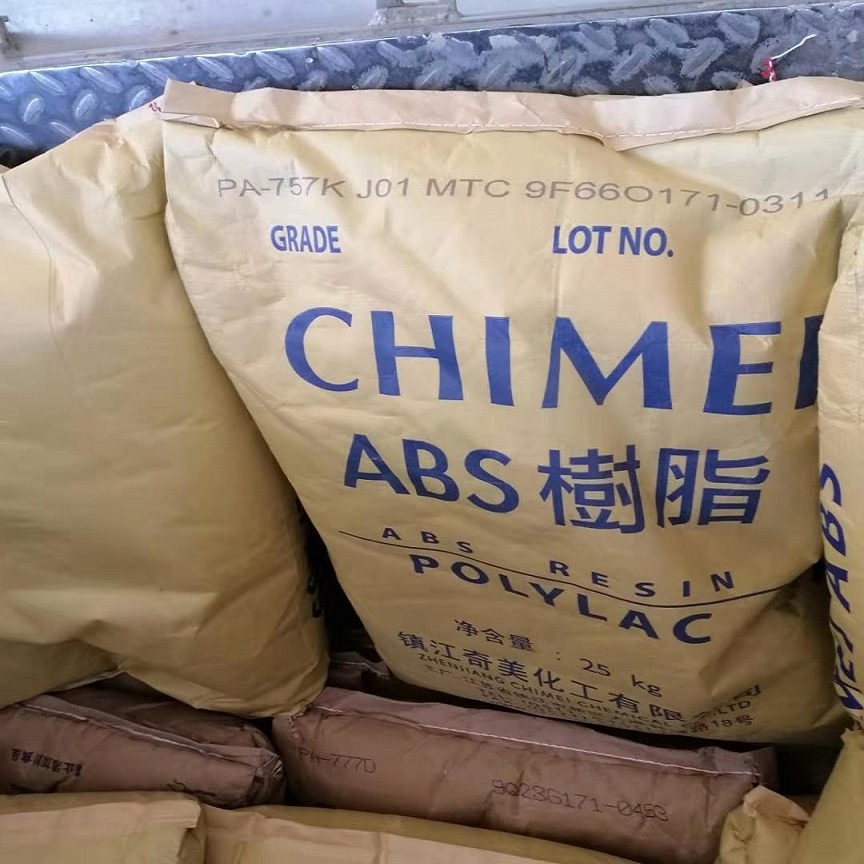
ABS resin is a terpolymer, meaning it is crafted from three distinct monomers: acrylonitrile, butadiene, and styrene . The magic of ABS lies not just in its ingredients, but in the synergy created when they are polymerized together. Typically, the composition ranges from 15% to 35% acrylonitrile, 5% to 30% butadiene, and 40% to 60% styrene . By adjusting these percentages, manufacturers can create a wide spectrum of ABS grades tailored for specific performance needs, from high-impact resistance to enhanced heat tolerance .
Each component in this "triple-play" polymer contributes a specific set of characteristics:
-
Acrylonitrile: This component is the key to the material's chemical resilience and structural integrity. It provides excellent resistance to heat, along with protection from harsh chemicals, oils, and fats. It also contributes to the overall hardness, rigidity, and high tensile strength of the final product .
-
Butadiene: As an elastomer (synthetic rubber), butadiene is the secret to ABS's legendary toughness. It imparts exceptional impact resistance and durability, ensuring that products made from ABS can withstand significant force and abuse without cracking. Crucially, it also provides ductility and maintains impact strength even at low temperatures, preventing brittleness in cold environments .
-
Styrene: This monomer is responsible for the aesthetic and processing qualities of ABS. It gives the plastic its characteristic glossy, impervious surface finish, makes it rigid, and, most importantly, provides excellent processing ease. Styrene ensures that the material flows smoothly during manufacturing processes like injection molding and 3D printing .
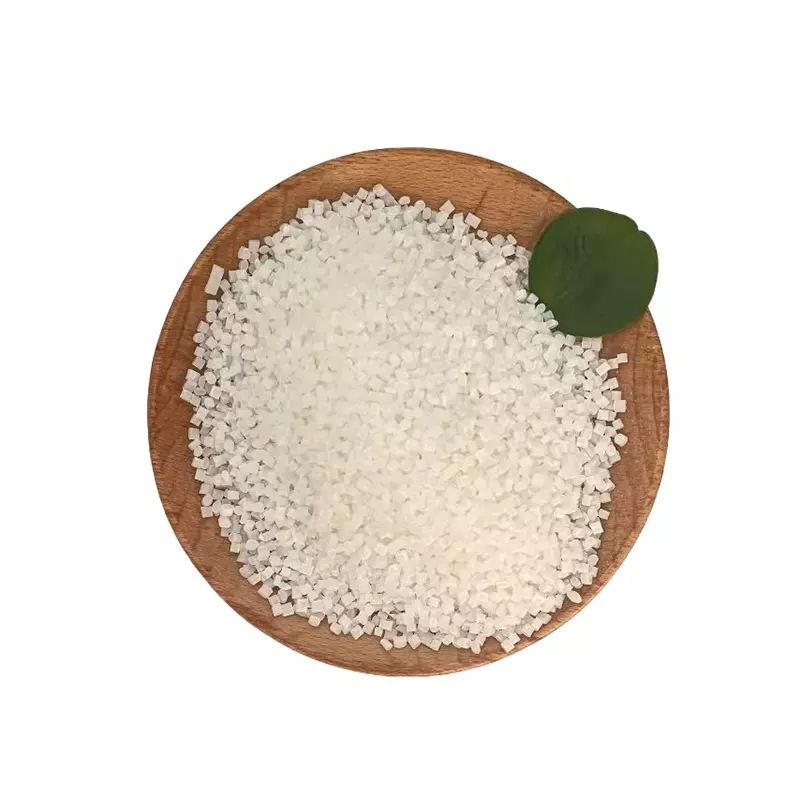
The result of this chemical synergy is an opaque, lightweight engineering thermoplastic (with a density of about 1.05 g/cm³) that offers a remarkable balance of properties . It boasts high rigidity, good abrasion and strain resistance, excellent dimensional stability, and effective electrical insulation properties that remain largely unaffected by temperature and humidity . While it is flammable and has poor weatherability (degrading under prolonged UV exposure), its indoor performance is unparalleled .
A Universe of Applications: Where ABS Granules Excel
The balanced portfolio of properties makes ABS the material of choice for a staggering variety of products. Its ease of processing, combined with its strength and surface finish, allows it to dominate several key sectors.
1. Automotive Industry
The automotive sector is one of the largest consumers of ABS. As the industry pushes for lighter, more fuel-efficient vehicles without compromising safety or aesthetics, ABS has become indispensable. It is widely used in both interior and exterior applications .
-
Interior Components: ABS is the standard material for instrument clusters (dashboards), glove compartments, interior trim panels, door liners, and steering wheel covers. Its ability to be easily colored, painted, or textured allows for premium finishes that meet the aesthetic demands of modern vehicle interiors .
-
Exterior Parts: It is also utilized for grilles, wheel covers, and mirror housings. The material's high impact resistance ensures these parts can withstand road debris and minor impacts .
2. Electronics and Electrical Appliances
ABS is the undisputed king of electronic housings. Its excellent electrical insulation properties, combined with its mechanical toughness and aesthetic versatility, make it ideal for protecting sensitive components .
-
Consumer Electronics: From the cases of computer monitors, laptops, keyboards, and mice to the bodies of printers and copiers, ABS provides the necessary rigidity and durable, high-gloss finish .
-
Home Appliances: It is extensively used in the manufacturing of vacuum cleaners (housings and components), washing machine lids, refrigerator liners, and power tool bodies. For applications requiring higher heat resistance or flame retardancy, modified ABS grades or blends like ABS/PC are often employed .
3. Toys, Consumer Goods, and DIY
Perhaps the most famous application of ABS in the consumer mind is in LEGO bricks, a testament to the material's exceptional dimensional stability and non-toxic nature . Beyond toys, its applications include:
-
Consumer Products: Luggage and hard-shell suitcases, kitchenware, food-grade containers (available in natural beige and black FDA-compliant grades), and sporting goods like helmet shells and golf club heads .
-
DIY and Plumbing: ABS pipes and fittings are widely used in non-potable water delivery systems, drainage, and sewage applications due to their corrosion resistance and durability .
4. Healthcare and Advanced Manufacturing
The medical field utilizes ABS for its sterilizability (via gamma radiation or ethylene oxide) and impact strength. It is commonly found in diagnostic equipment housings, surgical instrument handles, and medical device components . Furthermore, ABS is the dominant material in Fused Deposition Modeling (FDM) 3D printing, where it is extruded as a filament to create durable prototypes, jigs, fixtures, and even end-use parts .
Market Outlook and The Advantage
The global ABS plastic market is on a robust growth trajectory, driven by sustained demand from the automotive and electronics sectors. Valued at over $17 billion in 2024, the market is projected to grow at a steady CAGR to surpass $37 billion by the early 2030s . Key trends include a rising demand for sustainable and recycled ABS, as well as specialized grades like flame-retardant and high-impact variants .
At [Your Company Name], we understand that quality raw material is the foundation of a superior finished product. We are committed to supplying premium ABS plastic granules that meet the rigorous demands of modern industry. Whether you require general-purpose injection molding grades for consumer goods, high-flow grades for complex electronic housings, or high-impact blends for automotive parts, our portfolio is designed to help your business innovate and succeed. Partner with us to experience consistent quality, reliable supply, and deep material expertise.